Book train tickets to and from Seoul
Explore the most current information on trains to and from Seoul!
✅ Official tickets | 🔒 Secure booking | ✨ No hidden fees.
You'll be redirected to our trusted partner, Rail Ninja, to complete your purchase.
✅ Official tickets | 🔒 Secure booking | ✨ No hidden fees.
You'll be redirected to our trusted partner, Rail Ninja, to complete your purchase.
Book train tickets to and from Seoul
Explore the most current information on trains to and from Seoul! ✅ Official | 🔒 Secure | ✨ No hidden fees.
Redirects to Rail Ninja to complete your purchase.
Redirects to Rail Ninja to complete your purchase.

|
Train Routes to and from Seoul
Train Routes to and from Seoul
Seoul – Busan
High-speed rail route between Seoul and South Korea’s second largest city.
Distance: 325 km
Travel time: 2 h 30 m
Distance: 325 km
Travel time: 2 h 30 m
Seoul – Daegu
Direct rail link between Seoul and one of the country’s major regional cities.
Distance: 237 km
Travel time: 1 h 50 m
Distance: 237 km
Travel time: 1 h 50 m
Seoul – Daejeon
Short rail journey connecting Seoul with a major science hub.
Distance: 164 km
Travel time: 1 h 00 m
Distance: 164 km
Travel time: 1 h 00 m
Seoul – Ulsan
Rail route linking the capital with an important industrial city.
Distance: 410 km
Travel time: 2 h 40 m
Distance: 410 km
Travel time: 2 h 40 m
Seoul – Gangneung
Rail connection between Seoul and Korea’s east coast.
Distance: 229 km
Travel time: 2 h 00 m
Distance: 229 km
Travel time: 2 h 00 m
Seoul – Yeosu
Rail journey from the capital to a southern coastal city.
Distance: 390 km
Travel time: 3 h 00 m
Distance: 390 km
Travel time: 3 h 00 m
Train Stations in Seoul
Seoul Station is located in the heart of Seoul, South Korea, providing convenient access to the city and its surrounding regions. It serves as a major hub for high-speed trains, including the KTX, connecting Seoul with destinations such as Busan, Daegu, Daejeon, and Gwangju. The station features modern facilities, including waiting areas, restaurants, ticket counters, and direct connections to the Seoul subway system, making it an important gateway for travelers exploring South Korea.
How to Get from Seoul to Other Cities by Train
Seoul to Busan Train Journey
The Seoul to Busan route is one of South Korea’s most popular rail connections, linking the capital with the country’s second largest city. The journey takes around 2 hours 30 minutes, with frequent high-speed services available daily.
KTX high-speed trains are air-conditioned and feature comfortable seating, with some services offering Wi-Fi. You can easily compare departure times and ticket prices using our search form above.
The Seoul to Busan route is one of South Korea’s most popular rail connections, linking the capital with the country’s second largest city. The journey takes around 2 hours 30 minutes, with frequent high-speed services available daily.
KTX high-speed trains are air-conditioned and feature comfortable seating, with some services offering Wi-Fi. You can easily compare departure times and ticket prices using our search form above.


Seoul to Daegu Train Journey
The Seoul to Daegu route connects the capital with one of South Korea’s largest cities. The journey usually takes about 1 hour 50 minutes, with regular KTX services operating throughout the day.
KTX high-speed trains are air-conditioned and provide comfortable seating, with some services offering Wi-Fi. You can easily compare departure times and ticket prices using our search form above.
The Seoul to Daegu route connects the capital with one of South Korea’s largest cities. The journey usually takes about 1 hour 50 minutes, with regular KTX services operating throughout the day.
KTX high-speed trains are air-conditioned and provide comfortable seating, with some services offering Wi-Fi. You can easily compare departure times and ticket prices using our search form above.
Seoul to Daejeon Train Journey
The Seoul to Daejeon route is a busy connection linking South Korea’s capital with one of the country’s major science and technology centers. The journey typically takes around 1 hour, with frequent KTX departures available throughout the day.
KTX high-speed trains are air-conditioned and offer comfortable seating, with some services providing Wi-Fi. You can easily compare departure times and ticket prices using our search form above.
The Seoul to Daejeon route is a busy connection linking South Korea’s capital with one of the country’s major science and technology centers. The journey typically takes around 1 hour, with frequent KTX departures available throughout the day.
KTX high-speed trains are air-conditioned and offer comfortable seating, with some services providing Wi-Fi. You can easily compare departure times and ticket prices using our search form above.

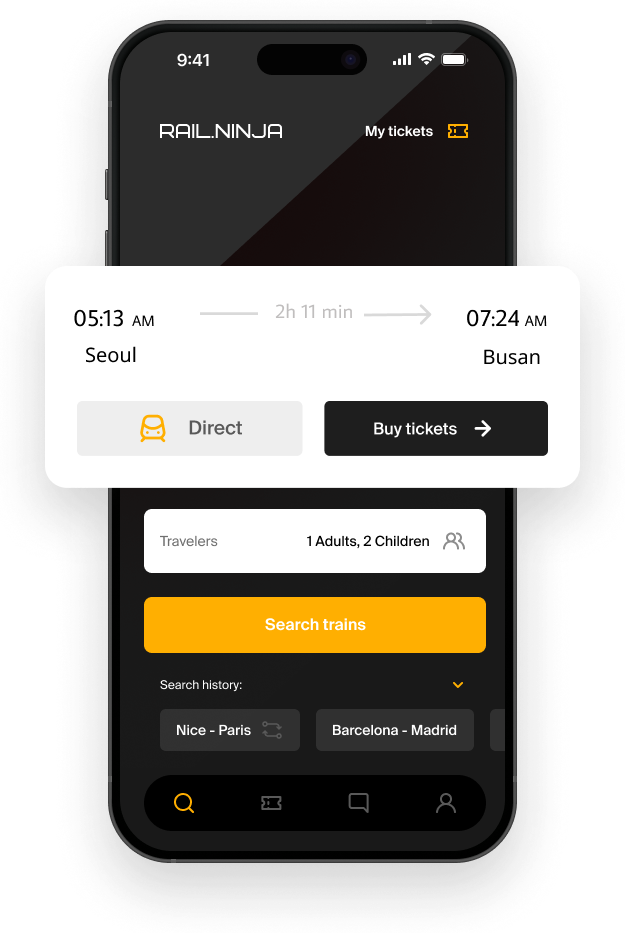
Try the new Rail Ninja App today
Get our free app to book & manage your trips on the go
Travel Tips for Visiting Seoul by Train
- Check Train SchedulesCheck South Korea train schedules early, especially if you are planning your journey around hotel check-in times or activities in cities such as Seoul, Busan, or Daegu.1
- Book Tickets EarlyBook your tickets in advance, especially during peak seasons such as summer, holidays, or festive periods, as demand for routes like Seoul to Busan and Seoul to Daegu can be high.2
- Arrive Early at the StationPlan to arrive at the station at least 30–45 minutes before departure to allow ample time for ticket collection, security checks, and finding your platform with ease.3
- Coordinate Arrival with TransportCoordinate your train arrival with local transport options to your hotel or main attractions in cities like Seoul, ensuring a smooth transfer while allowing extra time for busy city traffic.4
- Keep Your Itinerary FlexibleKeep your itinerary flexible, allowing time to explore South Korea’s landmarks and cities, from Seoul’s historic palaces to Busan’s coastal districts, without rushing between destinations.5
- Stay Hydrated and ComfortableStay hydrated during your journey, especially during warmer months, and ensure you're comfortable on the train by dressing in layers, as air conditioning can vary between trains.6
FAQ About Trains to and from Seoul
The KTX high-speed trains connect Seoul with major destinations such as Busan, Daegu, Daejeon, and Gwangju on South Korea’s modern rail network. These services are designed to provide fast, reliable, and comfortable travel across the country.
A typical KTX train journey between Seoul and Busan takes around 2 hours and 30 minutes, depending on the service and the number of stops. This is significantly faster than traveling by car, which can take around 4 hours or more.
Seoul’s main railway station, Seoul Station, is located in the central part of the city and is easily accessible by subway, taxis, and buses. The station is close to popular districts such as Myeongdong and Namdaemun, making it a convenient starting point for travelers.
Yes, KTX trains feature modern amenities including spacious seating, accessible facilities, and onboard services, making them suitable for families, elderly travelers, and passengers with reduced mobility. Many visitors choose the train for its comfort and efficiency.
It is recommended to arrive at least 30–40 minutes before departure to allow time for navigation, ticket checks, and boarding. During busy travel periods, arriving earlier can help ensure a smooth experience.
For first-time visitors, KTX trains are one of the best ways to travel between Seoul and other major cities in South Korea. With clear schedules, comfortable seating, and fast travel times, they provide an easy and efficient way to explore the country.